
Chicken Road Game Rules and Risk
Chicken Road works as a short cashout round: the player starts with a stake, watches the payout rise and must leave before the losing moment.
Risk grows because the longer the round continues, the higher the chance of losing the stake.
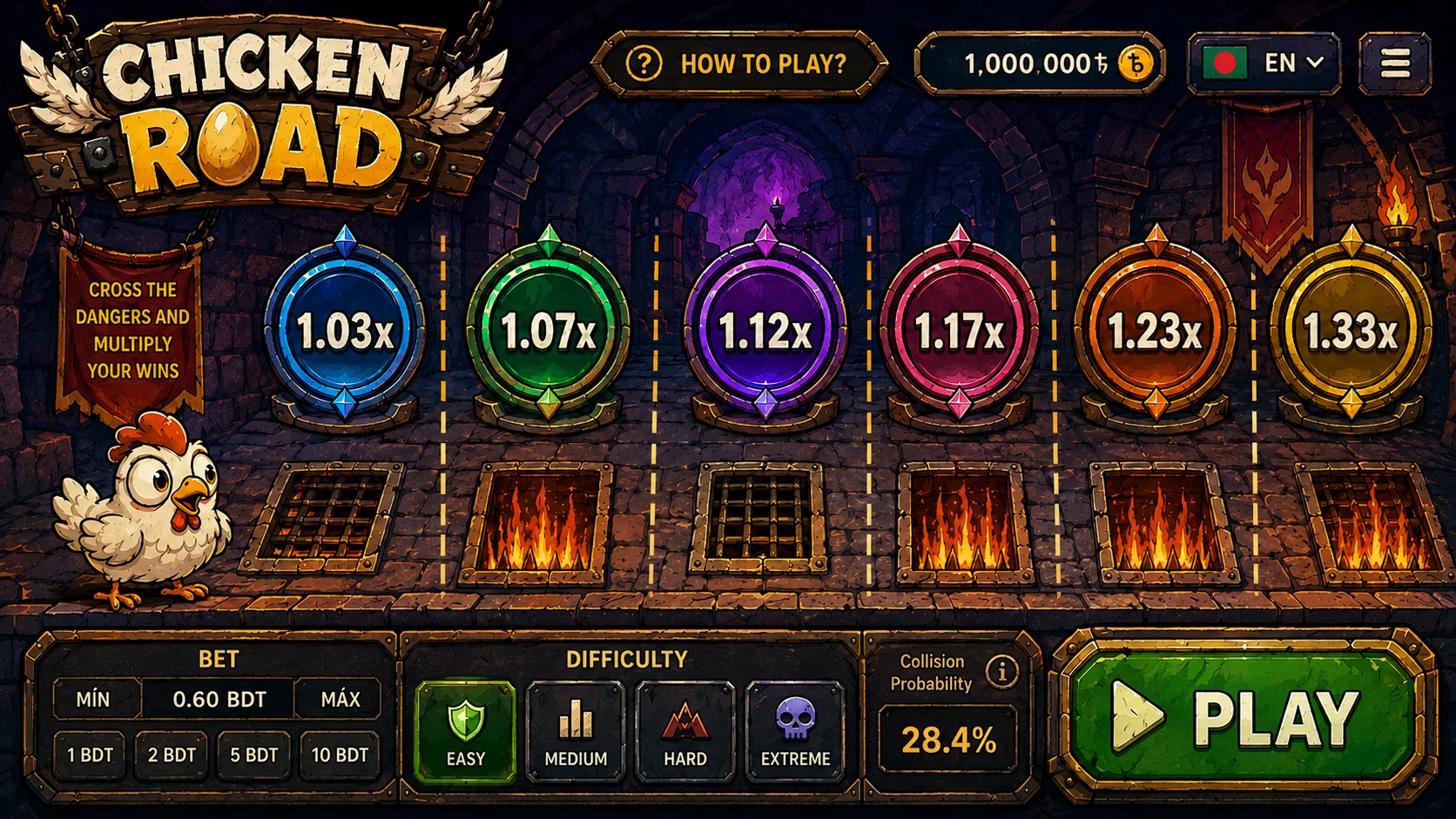
Round Mechanics
Each round begins with a stake. After the start, the payout number rises while the round continues. The player can leave through cashout and keep the current result. If the round reaches its loss point before that decision, the stake is gone.
The rules are simple, but the decision becomes harder as the payout grows. A larger number on the screen can make waiting feel reasonable. The longer the player waits, the closer the round may get to a losing result. That trade-off defines the round.
One round should not be treated as a signal for the next. A win does not make the following round safer, and a loss does not mean a better result is due. Previous wins or losses do not make the next round safer.
Round Flow
The round is easier to judge when each step is shown clearly instead of only showing the payout rising.

| Step | What happens | What it tells about risk |
|---|---|---|
| Stake | The round starts with a chosen amount | The possible loss is set before play begins |
| Growth | The payout rises as the round continues | Waiting becomes more tempting |
| Decision | Cashout locks the current result | The player controls exit timing, not the outcome |
| Failure | The round ends before cashout | The stake and temporary result disappear |
| Repeat | Another round can start quickly | Small losses can stack up through speed |
Cashout Decision
The cashout button decides whether the current payout is taken now or left at risk for longer. Once the round ends, the next round starts as a separate decision.
An early exit keeps a smaller result and limits exposure. A later exit aims for a higher return and accepts more time inside the round. Both choices can be reasonable inside the rules. Neither choice removes the chance of losing the stake.
The timing of cashout shows how long the stake stays at risk. A low target creates more frequent smaller exits, while a high target leaves the stake open for longer. Neither target changes the game's underlying uncertainty.
The trade-off should be visible before paid play starts. A screen that only highlights the growing payout gives an incomplete view. The loss condition needs the same visibility as the possible win.
How to Judge the Game
The rules matter more than the promotion around the game. The round should be clear before any balance is used, with payout growth and the losing condition explained together.
The same rules should appear before and after signup. If the wording changes after login, the player may be making a money decision with less information than expected.
Winning examples should not make the game look like it has a reliable system. The same cashout choice can feel sensible in one round and still fail in the next.
Signs of a Clear Game
Good signs are easy to see before real money is involved.
| Signal | Good sign | Weak sign |
|---|---|---|
| Rules | Payout and loss are explained together | Only a rising number is shown |
| Interface | The cashout button is clear and easy to read | The screen pushes action before rules |
| Risk tone | Limits are explained in plain language | The text makes profit sound expected |
| Round speed | Fast repeats are shown as extra exposure | The speed is shown only as excitement |
| Operator context | Game mechanics are separate from account terms | Gameplay is mixed with vague trust claims |
Common Mistakes
The most common mistake is treating a recent result as information about the next round. Chicken Road rounds can feel connected because they happen quickly, but the next decision still carries its own risk.
Another mistake is confusing a clean interface with low risk. A simple screen can make the game feel lighter than it is. The rule is still the same: cashout must happen before the round fails.
Practice rounds can make the game feel safer than it is. A demo round is useful for learning the pace, but practice balance has no financial weight. A comfortable session without money does not prove that paid rounds will feel the same.

Bangladesh Game Context
Players in Bangladesh often find Chicken Road inside a casino site. Login and bonus terms are separate from the round itself, but they can still make the rules harder to understand.
On mobile, the mechanics should stay visible. Small screens make it easier for buttons and pop-ups to cover the details that matter. The round description should stay readable before any deposit step appears.
Language also matters. Rules for Bangladesh players should use clear English, not vague claims about official access or guaranteed results. The mechanics should be understandable without guessing what the operator means.
The first screen should not hide the rules behind bonus claims or download prompts. If the round rules, risk note and cashout explanation are all easy to find, the game can be understood without trusting promotional claims.
Real-Money Risk
Real-money play changes the weight of every cashout decision. In practice, a late exit changes only a test balance. With real funds, the same delay becomes a financial loss.
Fast rounds make this risk easier to underestimate. A single small stake may not feel serious, but repeated rounds can change the session result quickly. Risk should be judged by the whole session, not by one round.
Session speed matters because there is little time between decisions. After a loss, the next stake can feel like a quick correction. After a win, the next round can feel easy to justify. Both reactions increase exposure.
Bankroll control matters because fast rounds can lead to repeated losses. A fixed budget and a clear stopping point do not make the game profitable. They only reduce the chance that speed turns into chasing.
Risk Controls
Risk controls are not strategies for winning. They are limits that make it easier to stop before losses build up.
| Control | Plain use | Why it matters |
|---|---|---|
| Small stake | Keep each round low compared with the session budget | One loss should not push the next decision |
| Short session | Set an end point before starting paid play | Fast rounds can hide how quickly losses repeat |
| No chasing | Treat a loss as finished, not as a debt to recover | Chasing turns speed into extra exposure |
| Rule check | Read the loss condition before the first stake | The visible payout is only half of the game |
| Device caution | Install a mobile app only when the source is clear | Installation risk is separate from game mechanics |
What Belongs Outside the Game
The game itself is only the round: money enters, the payout moves and the exit decision decides whether the result is kept. Login screens, deposits and bonus terms sit on the casino side because they happen before or after that moment.
Download safety is also a separate question. A game can have clear mechanics while a file source remains risky. A name like Chicken Road 2 should point to a real change, not only a new label.
A downloaded mobile file can still be unsafe even when the gameplay looks simple. The same logic applies to any second-version name: the label should be supported by visible differences.
Keeping these checks apart makes the game easier to understand. The round can be judged by what happens during play, while login and installation risks can be checked separately.
Game Takeaways
The game is easy to describe at the basic level. A stake starts the round. The payout rises. Cashout must happen before the loss point. The trade-off should stay clear: a higher possible payout means more time at risk.
For players in Bangladesh, clear rules and a readable mobile layout matter more than loud promotion. The mechanics should be visible before money appears, without being buried under casino offers or download prompts.
Chicken Road Game FAQ
What is the Chicken Road game?
It is a cashout-style casino game where the payout rises during a short round and the player exits before the round reaches a loss point.
Is Chicken Road a skill game?
The player chooses when to cash out, but that choice does not make the next round predictable. The practical control is managing stake size and session length.
What should be clear before playing Chicken Road?
Before paid play starts, the player should understand how the round can end and why repeated fast decisions can turn a small stake into a larger session loss.
Does demo play prove a strategy?
No. Playing in demo mode can show the interface and pace of the round, but it does not prove that the same timing will work with real money.
What changes when real money is used?
The same late cashout that only affects a practice balance becomes a real financial loss when paid play begins.